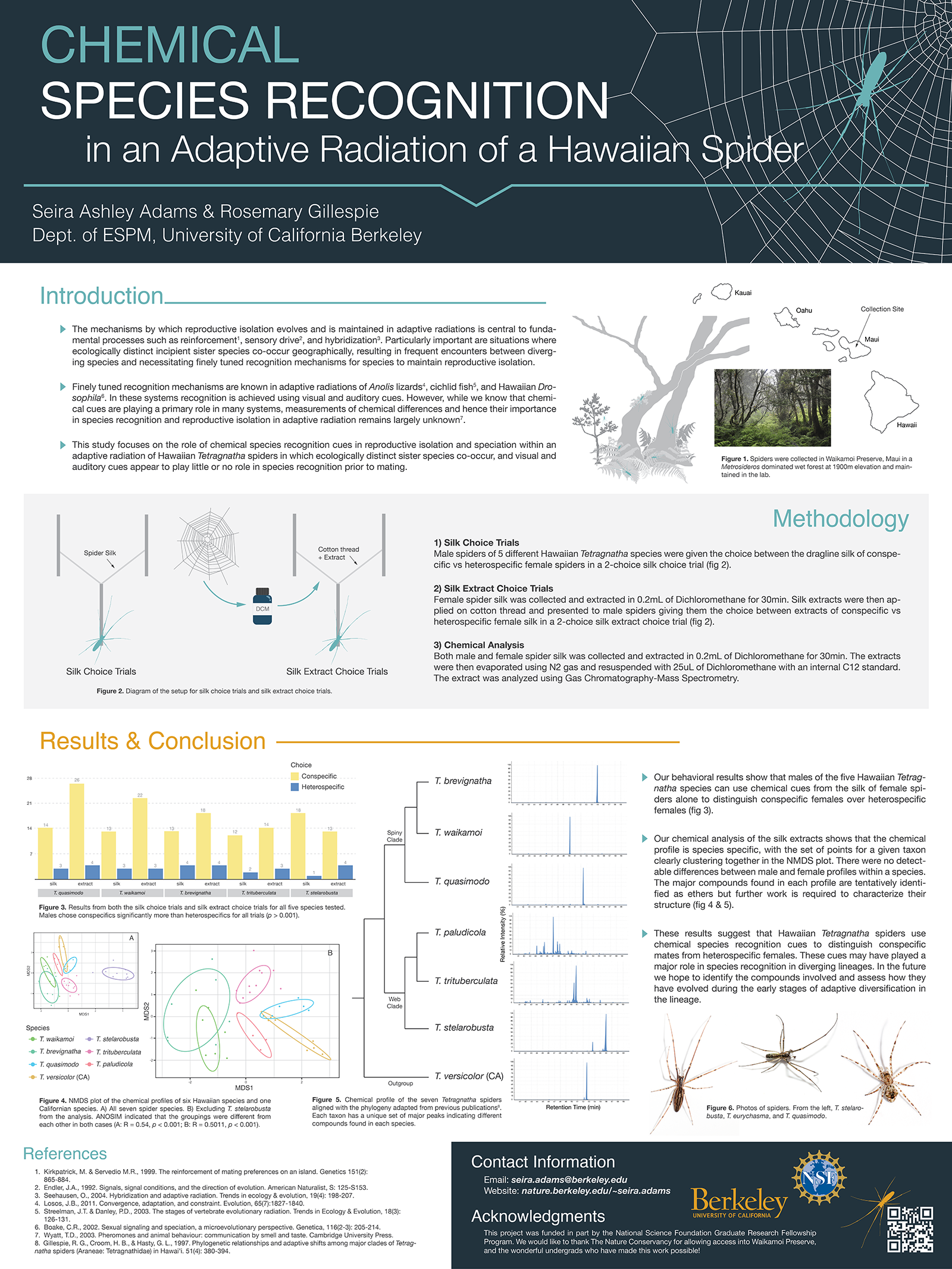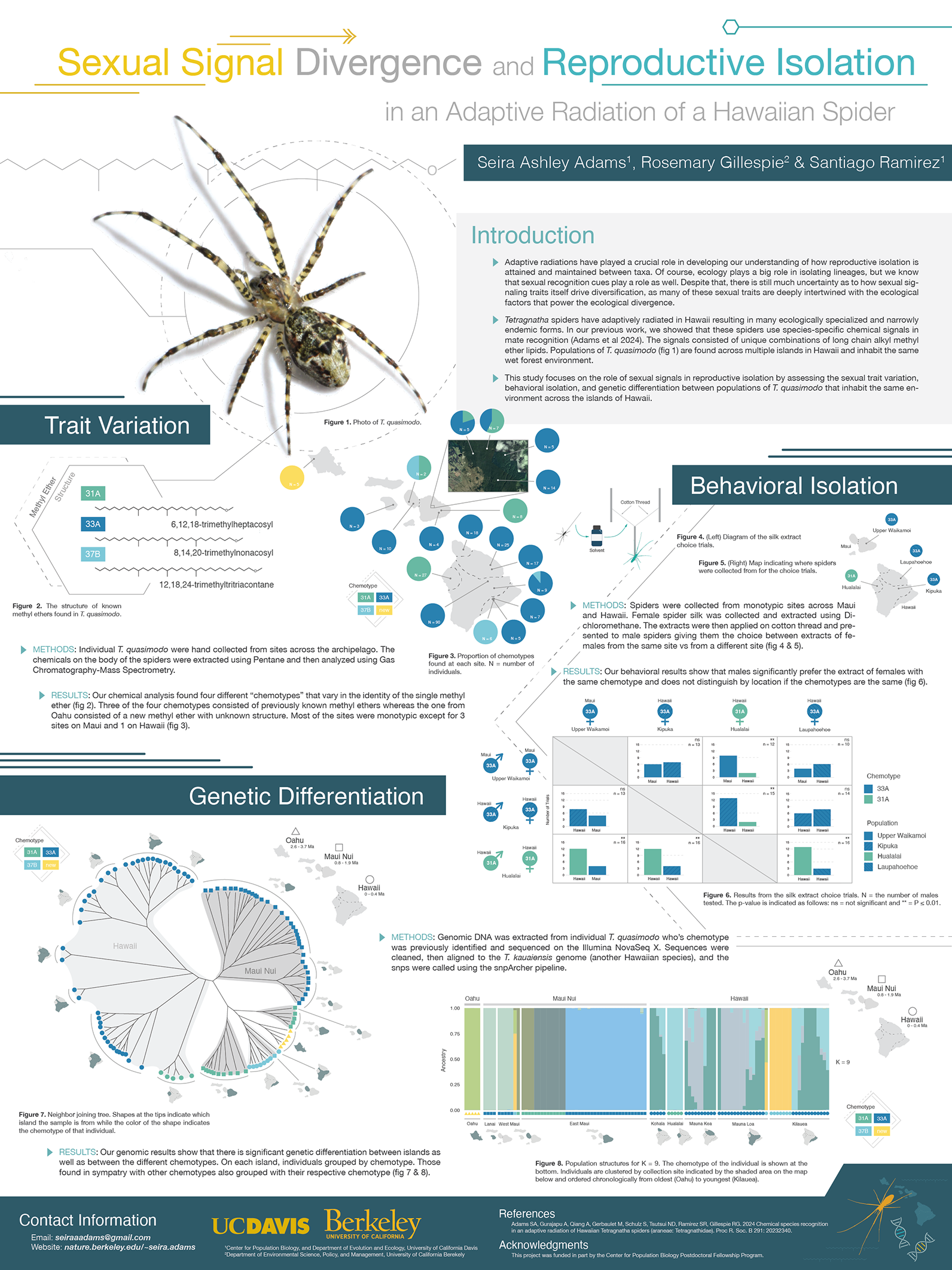
Chemical Communication & Reproductive Isolation
An Adaptive Radiation in Hawaii
Background
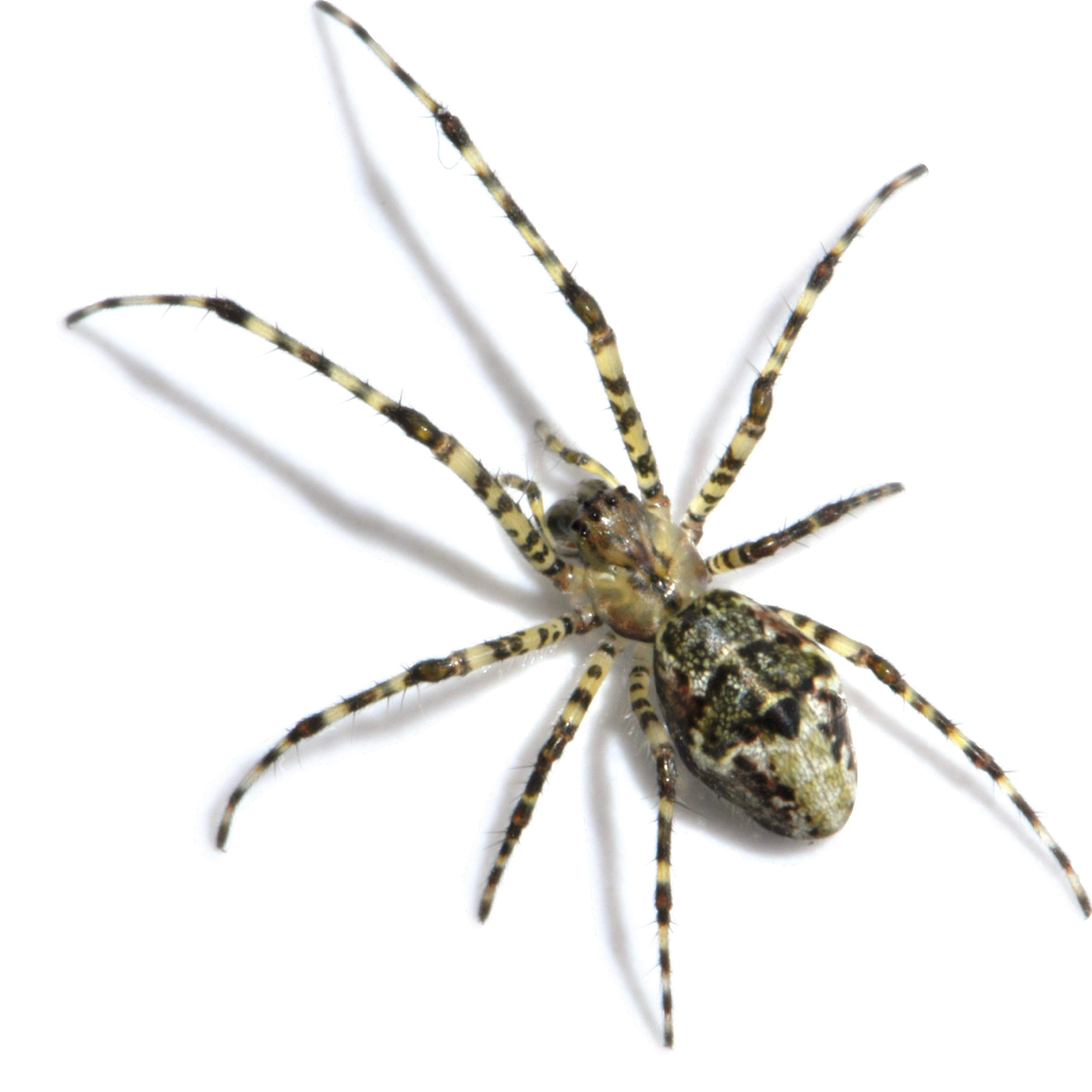
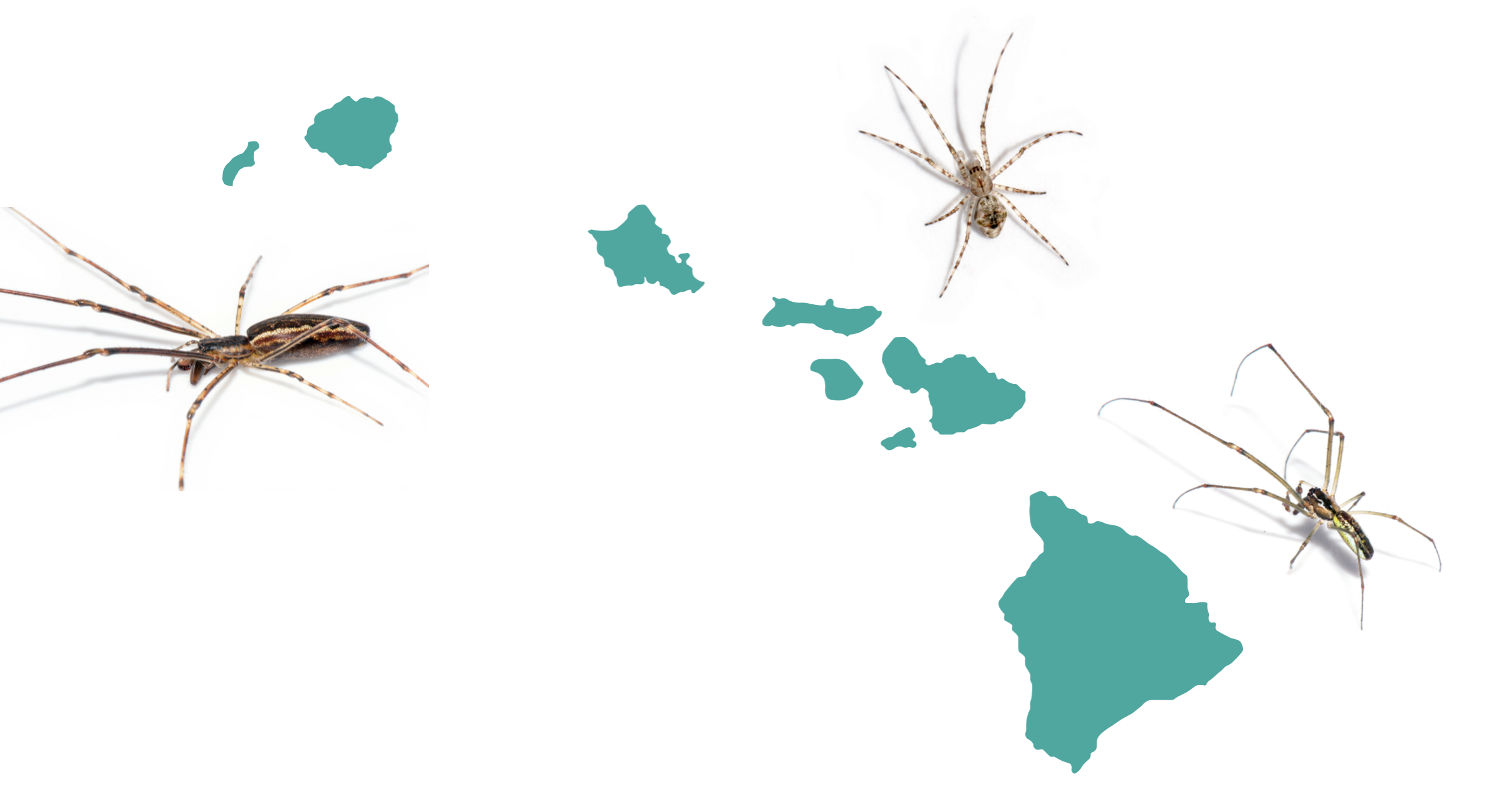
Adaptive radiations offer classic models of speciation, yet the relative timing of sexual versus ecological divergence remains unclear because the two are often deeply entangled. In Hawaii, Tetragnatha spiders have adaptively radiated and closely related species co-occur with minimal hybridization despite lacking visual or vibratory courtship. This makes them an exceptional system to isolate how sexual signals drive reproductive isolation.
Core Questions
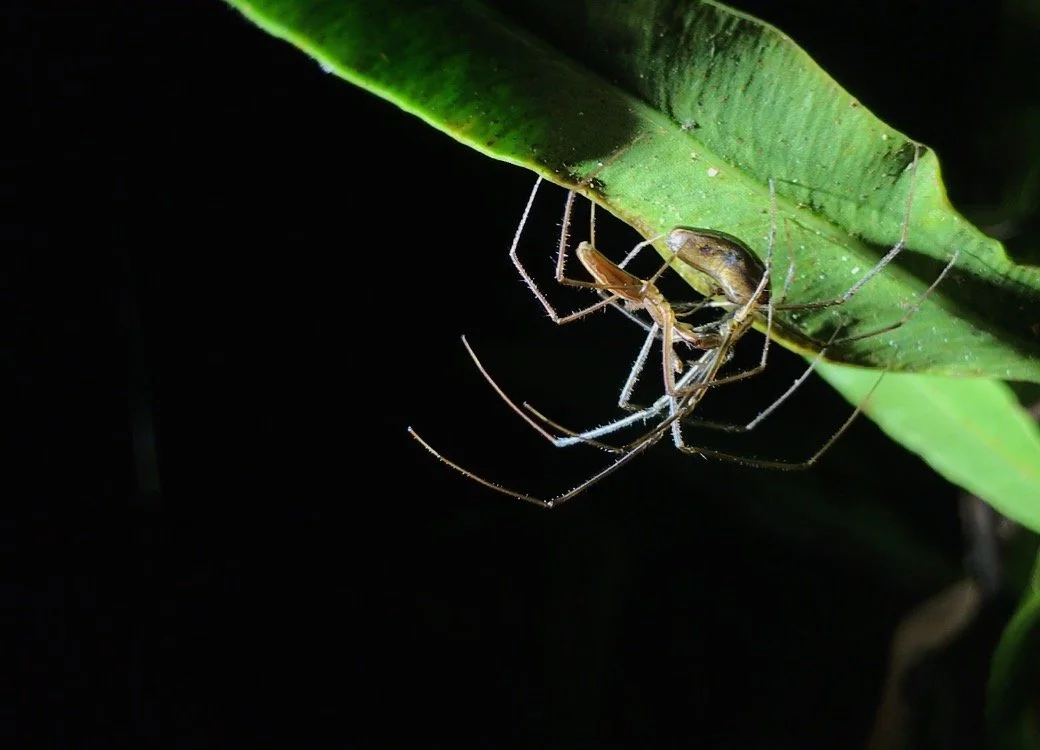
How do closely related co-occurring species recognize conspecific mates in the absence of visual or vibratory cues?
Can sexual signal divergence initiate reproductive isolation prior to morphological or ecological divergence?

Species Recognition via Chemical Signals
Key Findings
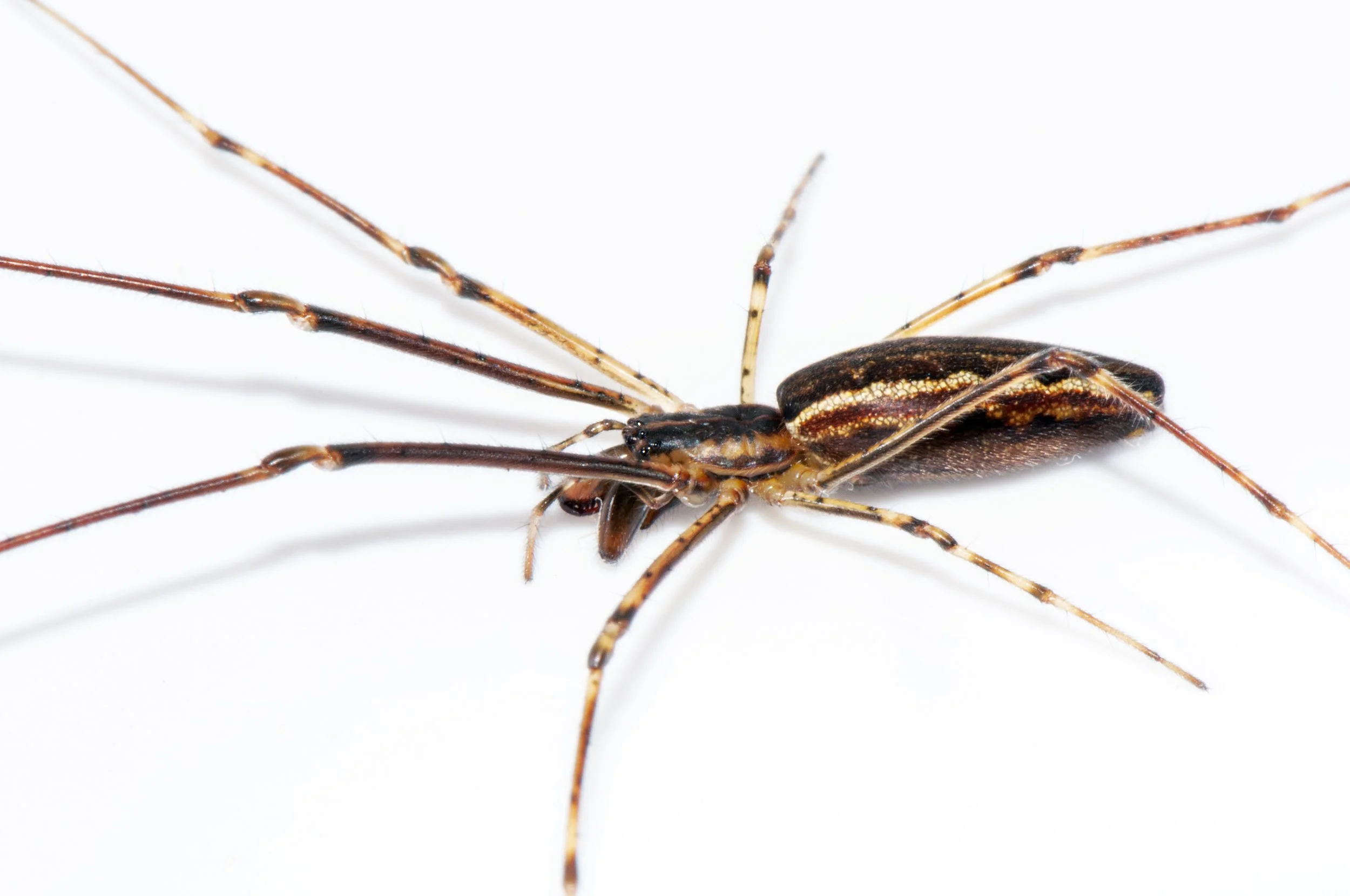
Using behavioral bioassays paired with GC-MS, I showed that Hawaiian Tetragnatha spiders discriminate conspecific from heterospecific mates using long-chain alkyl methyl ethers found on the silk and cuticle of females. Sympatric species produce distinct, non-overlapping chemical profiles that were highly species-specific.
Signal Divergence Across Populations
Key Findings

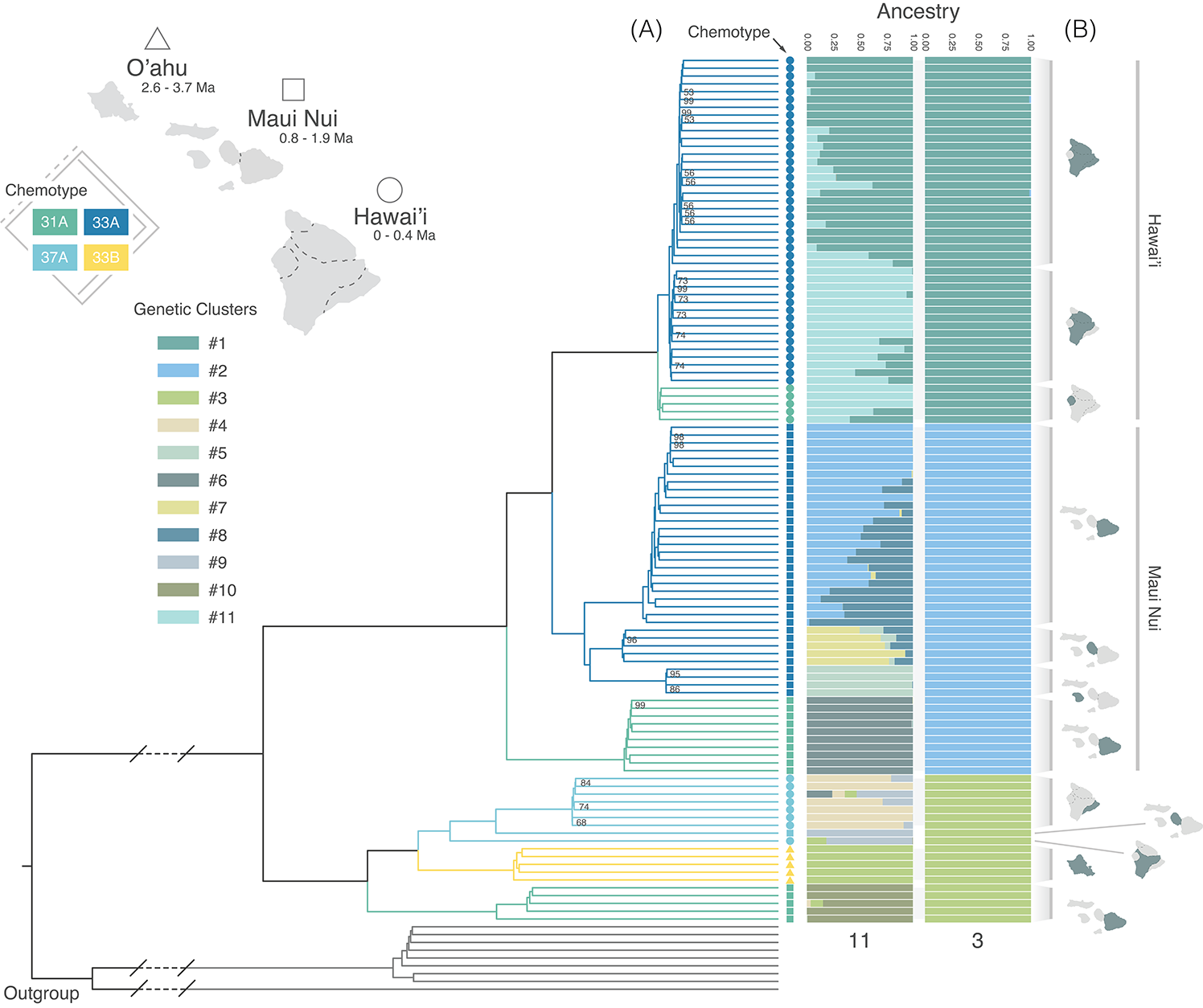
Focusing on Tetragnatha quasimodo across the Hawaiian archipelago, I identified four discrete chemical profiles (chemotypes), each defined by a single dominant methyl ether. In mate choice trials, males strongly preferred female silk extracts matching their own chemotype. Whole-genome resequencing revealed that while chemotypes on older islands are strongly genetically differentiated, populations on the youngest island (Hawaiʻi) exhibit distinct chemotypes despite minimal genetic differentiation and shared genomic ancestry.